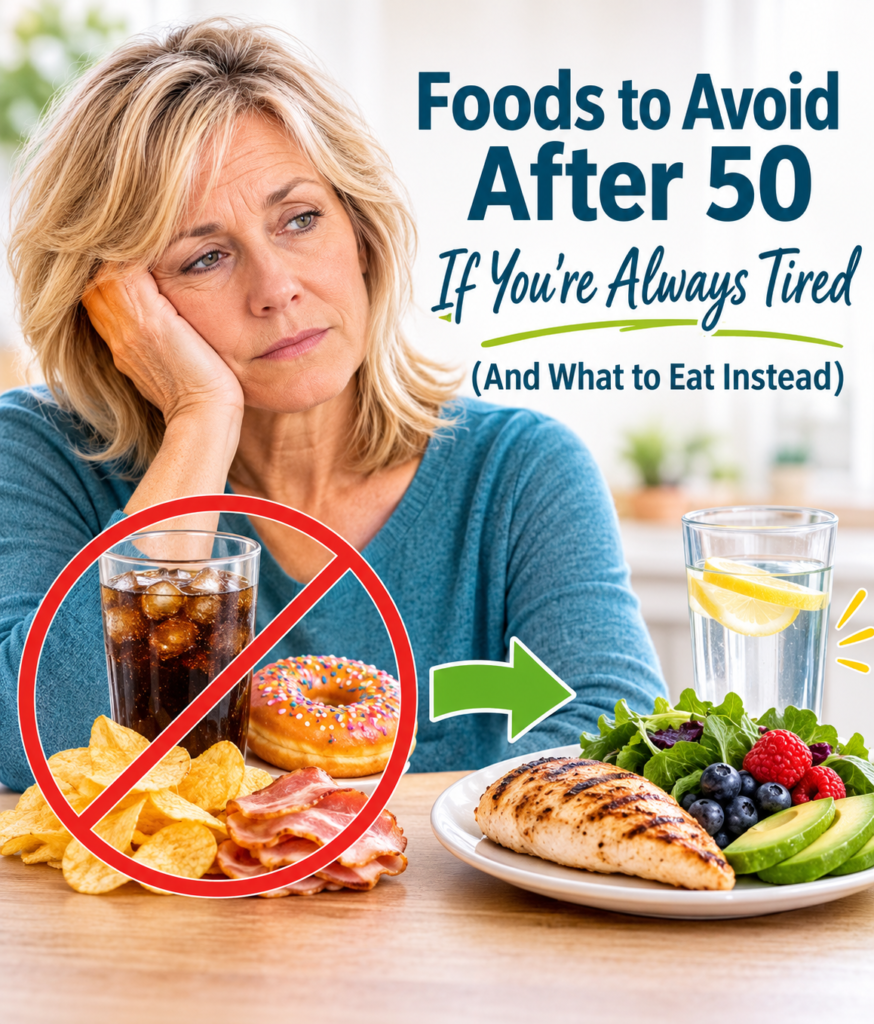
Foods to Avoid After 50 If You're Always Tired (And What to Eat Instead)
You eat pretty well. You don’t eat fast food every day. You even skip dessert most nights. But by mid-afternoon you’re dragging, and the scale hasn’t moved in months. If that sounds like you, you’re not imagining it, and it’s not a willpower problem.
After 50, the same foods can land in your body very differently than they did at 35. So this isn’t a list of foods you can never touch again. I don’t believe in that, and it doesn’t work for long anyway. Think of it as five foods to eat less often, with an easy swap for each one. One small swap at a time is how real change sticks.
Why Food Hits Differently After 50
A few things change in our 50s, and they all affect energy and weight.
First, we slowly lose muscle each year unless we work to keep it. Muscle is where a lot of the sugar from your meals goes, so less muscle means more sugar left in your blood. Second, as estrogen drops during menopause, your cells often get worse at listening to insulin. Insulin is the hormone that moves sugar out of your blood and into your cells. When your cells don’t listen well, your body makes more insulin, and high insulin makes it hard to burn stored fat, especially around the belly.
Third, your protein needs go up, not down. Protein is the building-block food: meat, fish, eggs, beans, and Greek yogurt. A group of experts who study aging (the PROT-AGE group) recommends that adults over 65 get at least 1.0 to 1.2 grams of protein per kilogram of body weight each day. That’s more than the old standard. Most of us aren’t close.
And last, sleep gets more fragile. When sleep is broken, your body makes more cortisol, a stress hormone, and you wake up tired and hungry. So the foods that spike your blood sugar or break up your sleep hit twice as hard now.
1. Sweet Drinks
This one includes soda, juice, sweet tea, and those big flavored coffee drinks. Even “healthy” smoothies can belong here. Liquid sugar goes into your blood fast because there’s nothing to slow it down. You get a quick lift, then a crash an hour later. And drinks don’t fill you up the way food does, so you end up eating just as much later.
Eat this instead: water, sparkling water with lemon or lime, unsweetened tea, or coffee with a splash of milk. If you love your sweet coffee drink, try a smaller size or half the syrup this week. You don’t have to quit it all at once.
2. A Sweet, Carb-Only Breakfast
Cereal, a muffin, a bagel, toast with jam, or a bowl of granola. These feel like normal breakfast foods, but they’re mostly carbs with very little protein. Carbs are foods that turn into sugar in your body, like bread, cereal, pasta, rice, fruit, and sweets. When breakfast is mostly carbs, many women are starving and foggy by 10 a.m.
It also matters for your muscle. Spreading protein across your day, starting at breakfast, is one of the easiest ways to protect the muscle you have.
Eat this instead: a protein-first breakfast. Two or three eggs, a cup of plain Greek yogurt with berries, cottage cheese with fruit, or even leftover chicken. Aim for a palm-sized portion of protein or more. Keep the toast if you want it. Just add the protein and eat it first.
3. “Healthy” Packaged Snacks
Snack bars, crackers, 100-calorie packs, rice cakes, and sweetened flavored yogurts often get sold as healthy. Many of them are what experts call ultra-processed food. That means foods made mostly in a factory from refined ingredients, with additives you wouldn’t use in your own kitchen.
Here’s why it matters. In a 2019 study at the National Institutes of Health, adults lived in a research center for four weeks. For two weeks they ate mostly ultra-processed foods, and for two weeks they ate mostly whole foods. The meals offered the same calories, sugar, fat, and fiber. Yet on the ultra-processed diet, people ate about 500 more calories a day and gained about 2 pounds in two weeks. On the whole-food diet, they lost about 2 pounds. They didn’t try to eat more. The food made it easy.
Eat this instead: real-food snacks that have protein or fiber. A handful of nuts, cheese and an apple, a hard-boiled egg, veggies and hummus, or plain Greek yogurt. These keep you full longer, which means fewer trips to the pantry at 3 p.m.
4. Processed Meats
Deli meat, hot dogs, bacon, sausage, and many lunch meats are quick and easy, which is exactly why we lean on them. But most are heavily processed and high in salt. The World Health Organization’s cancer research agency lists processed meat as a known cause of colon cancer. That doesn’t mean one BLT is dangerous. It means processed meat shouldn’t be your everyday protein.
Eat this instead: fresh protein that’s still fast. A store-bought rotisserie chicken, canned tuna or salmon, eggs, or beans. Cook a batch of chicken on Sunday and you have quick lunches all week.
5. The Nightly Glass of Wine
This is the one most women think is helping. A glass of wine feels relaxing, and it can make you sleepy at first. But alcohol breaks up your sleep later in the night, so you’re more likely to wake at 2 or 3 a.m. and feel worn out in the morning. Doctors at Mayo Clinic also note that alcohol can trigger hot flashes and night sweats in some women. Then you’re tired, so you reach for sugar and caffeine the next day, and the cycle keeps going.
Eat this instead: a calming evening drink without the alcohol. Try herbal tea, sparkling water with lime in a nice glass, or a short walk after dinner to unwind. If you do drink, have it earlier in the evening with food, and keep it to one. Or skip it for a week and notice how you sleep.
What to Eat More Of
If you’re wondering what’s left, here’s the good news. There’s a lot.
- Protein at every meal: eggs, fish, chicken, Greek yogurt, cottage cheese, beans, and lentils.
- Fiber foods: vegetables, berries, beans, and whole grains. Fiber is the part of plants your body can’t fully break down, and it slows sugar down like a speed bump.
- Healthy fats: olive oil, avocado, nuts, and seeds. A little fat with your meal keeps you full longer.
- Water: many of us mistake thirst for hunger or tiredness.
A simple plate to aim for: half vegetables, a quarter protein, and a quarter carbs you enjoy, with a little healthy fat.
Start With One Swap
I use the D.R.E.S.S. framework with every client: Diet, Rest, Exercise, Stress reduction, and Supplementation. Food is just the D, and it works best when you don’t try to fix everything at once.
So pick one swap from this list. Just one. Maybe it’s adding eggs to breakfast, or trading your afternoon snack bar for nuts. Do it for seven days and notice how your energy feels. Then add the next one.
You’re not lazy, and you’re not broken. Your body changed, so your inputs need to change with it.
If you want a simple way to see where your own load might be adding up, grab my free Hidden Inflammation Checklist at tally.so/r/0QgzzN?source=blog. And if you’d like help building a plan around your own body and labs, you can book a call with me at myheart4health.net/book.